
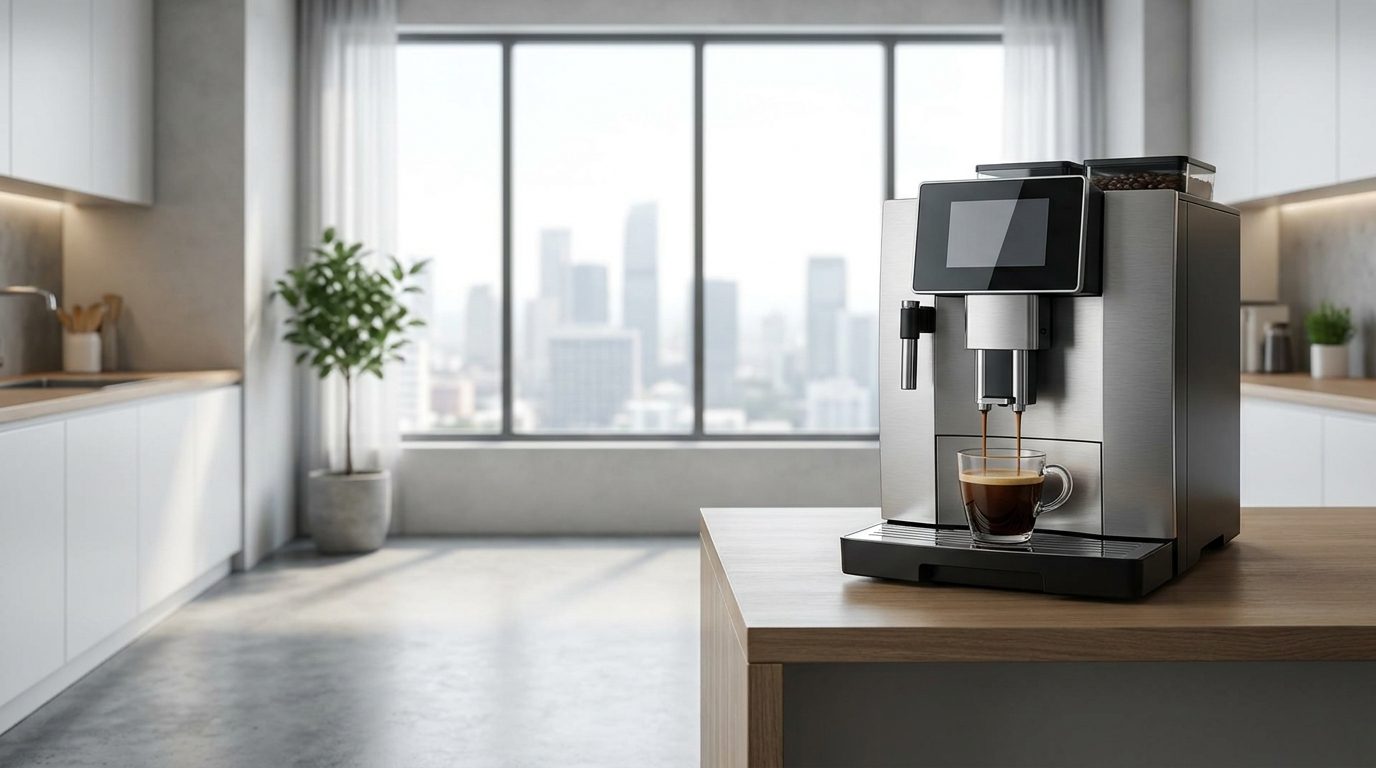
For most offices the choice is between a capsule machine and a bean-to-cup machine. Capsule suits teams up to roughly a dozen regular drinkers, where nobody wants a cleaning duty and consistency matters more than bean choice. Bean-to-cup suits larger offices with steady all-day demand and one person willing to own the daily rinse. Beyond about fifty regular drinkers, a canister or commercial machine usually makes more sense than either.
Note the second variable in that sentence. Office coffee machines fail on cleaning ownership far more often than on capability.
Start with three numbers
Before comparing machine types, write down three figures for your office.
Regular drinkers. Not headcount — the number of people who actually make a coffee on a normal day. In most Sri Lankan offices a meaningful share of staff drink tea, so a coffee machine and a hot water source are two different requirements.
Cups at the peak. Morning arrival and the post-lunch slump produce queues. A machine that takes 45 seconds per drink is fine at 30 cups a day and painful when 15 of those cups happen in the same 20 minutes.
Milk drinks as a share of orders. Milk is what turns an office machine into a cleaning problem. If most people drink black coffee, your options widen considerably.
Capsule machines: predictable and low-effort
A capsule machine pierces a sealed pod of pre-ground coffee and pushes hot water through it. Dose, grind and tamp are fixed at the factory, so every cup is identical and nobody needs training. There are no grounds to dispose of beyond the used capsule, and no grinder to clean.
The capsule coffee machine range includes machines aimed at exactly this use — the Nespresso Vertuo Coffee and Espresso, the Lavazza A Modo Mio Voicy and the EXPRESSI Capsule Coffee Machine. The Sokany Multi Capsule Powder Compatible Coffee Machine is built to take ground coffee as well as capsules, which is worth noting if you want a fallback when a capsule format is hard to restock.
That last point is the real capsule question. Each system uses its own capsule format, and a machine is only as good as your ability to keep buying its capsules. Before you commit an office to a capsule platform, confirm which format the machine takes and that you can reorder it reliably in Sri Lanka.
Bean-to-cup machines: better coffee, one cleaning duty
A bean-to-cup machine holds whole beans, grinds each drink to order, brews it and drops the puck into an internal bin. Fresh grinding is genuinely better in the cup than pre-ground pods, and you can change beans whenever you like.
The Magnifica Start Espresso Machine with Automatic sits in the fully automatic coffee machine range and is the shape of machine most offices land on. The obligations that come with it are the puck bin, the drip tray, the descaling cycle, and — if the machine handles milk — a milk circuit that has to be cleaned every day it is used. Skip that for a week and the machine will taste like it.
Bean-to-cup makes sense when someone owns the routine: an office manager, a pantry attendant, or a rota that people actually follow.
Canister and commercial machines: past fifty drinkers
Once demand outgrows one brew unit, the question changes from machine type to throughput. An Industrial 2 Canister Coffee Machine dispenses from prepared canisters and serves a queue quickly, which is why they appear in canteens, training rooms and event pantries rather than executive floors. Larger sites often add a machine from the commercial espresso machine range in the staff canteen instead.
Remember the tea side of the pantry too. A unit from the commercial water boiler range handles tea, instant drinks and cup warming without tying up the coffee machine, and it removes the queue caused by people using an espresso machine's hot water tap.
Capsule vs bean-to-cup vs canister
| Factor | Capsule | Bean-to-cup | Canister / commercial |
|---|---|---|---|
| Typical office size | Small teams | Medium to large offices | Canteens and large sites |
| Coffee freshness | Sealed pre-ground | Ground per cup | Prepared in canisters |
| Training needed | None | Minimal | Minimal |
| Daily cleaning | Empty capsule bin and tray | Puck bin, tray, milk circuit | Canister and dispenser cleaning |
| Choice of coffee | Limited to the capsule format | Any beans you like | House blend or mix |
| Speed for a queue | One cup at a time | One cup at a time | Fast, continuous |
| Milk handling | Pod, frother or separate jug | Built-in frother on many models | Usually built into the mix |
| Main failure mode | Capsule supply runs out | Milk circuit neglected | Stale product in canister |
| Waste per cup | One capsule | Coffee puck | Minimal |
Sizing by office profile
- Under 10 regular drinkers, mostly black coffee: capsule, or a compact semi-automatic if someone in the team enjoys making coffee. The semi-automatic espresso machine range covers that case.
- 10–25 drinkers, mixed milk and black: capsule if simplicity wins, bean-to-cup if quality matters and a cleaning owner exists.
- 25–50 drinkers: bean-to-cup, and plan for the peak — two machines in different pantries usually beat one large machine on one floor.
- 50+ drinkers or a canteen: canister or commercial equipment, with a water boiler alongside for tea.
- Client-facing reception or boardroom: a capsule machine looks and behaves well in front of visitors, and never presents a guest with a maintenance prompt.
How to choose: decision checklist
- Name the person responsible for daily cleaning. If you cannot, choose capsule.
- Confirm the consumable supply chain — capsule format availability, or a bean supplier who can deliver on a schedule.
- Check the peak-hour cup count, not the daily total, against how long one drink takes.
- Decide the milk method before you buy: pod, separate frother, built-in circuit or a jug in the fridge. Each has a different hygiene burden.
- Check the power point and the counter depth. Pantry counters are shallower than they look once a machine, a tray and a bin are in place.
- Consider water hardness. Descaling frequency depends on your supply, and scale is what ends the life of a heating element.
- Separate tea from coffee. A dedicated hot water source removes most of the queue.
- Plan for waste. Capsules and pucks both need a bin someone empties.
For a broader view of every category, read the coffee machine buyer's guide for Sri Lanka.
Frequently asked questions
What is the best coffee machine for a small office? For a team of up to about a dozen regular drinkers, a capsule machine is usually the best fit. It needs no training, produces the same cup for every user, and its only routine is emptying the capsule bin and drip tray. Confirm you can reliably restock the capsule format first.
Is a capsule machine or a bean-to-cup machine cheaper to run in an office? That depends on your consumable supply and cup volume, so compare the per-cup consumable you can actually source rather than assuming. Operationally, capsules shift effort to buying pods, while bean-to-cup shifts it to daily cleaning and periodic descaling.
How many people can one office coffee machine serve? Judge by the peak, not the total. A single-brew machine producing one cup at a time will hold a queue when more than a handful of people arrive together, so offices above roughly 25 regular drinkers often do better with two machines on different floors than one larger unit.
Do office coffee machines need plumbing? Most capsule and bean-to-cup machines are tank-fed and only need a power point and someone to refill them. Plumbed-in machines remove the refilling chore but require a water connection and usually filtration, which makes them a fit-out decision rather than an appliance purchase.
What about staff who drink tea? Give tea its own hot water source. Using an espresso machine's hot water tap for tea creates a queue at the one machine everyone needs, and a separate boiler serves tea, instant drinks and hot water for the pantry at the same time.
Where to start
If simplicity and zero training are the priority, begin with the capsule coffee machine collection. If your office has the volume and someone to own the routine, compare bean-to-cup models instead — and size both against your peak twenty minutes, not your daily average.
Share:
Barista tools list for beginners: what a new café bar actually needs
Milk frothing pitcher size guide: choosing the right jug for latte art