
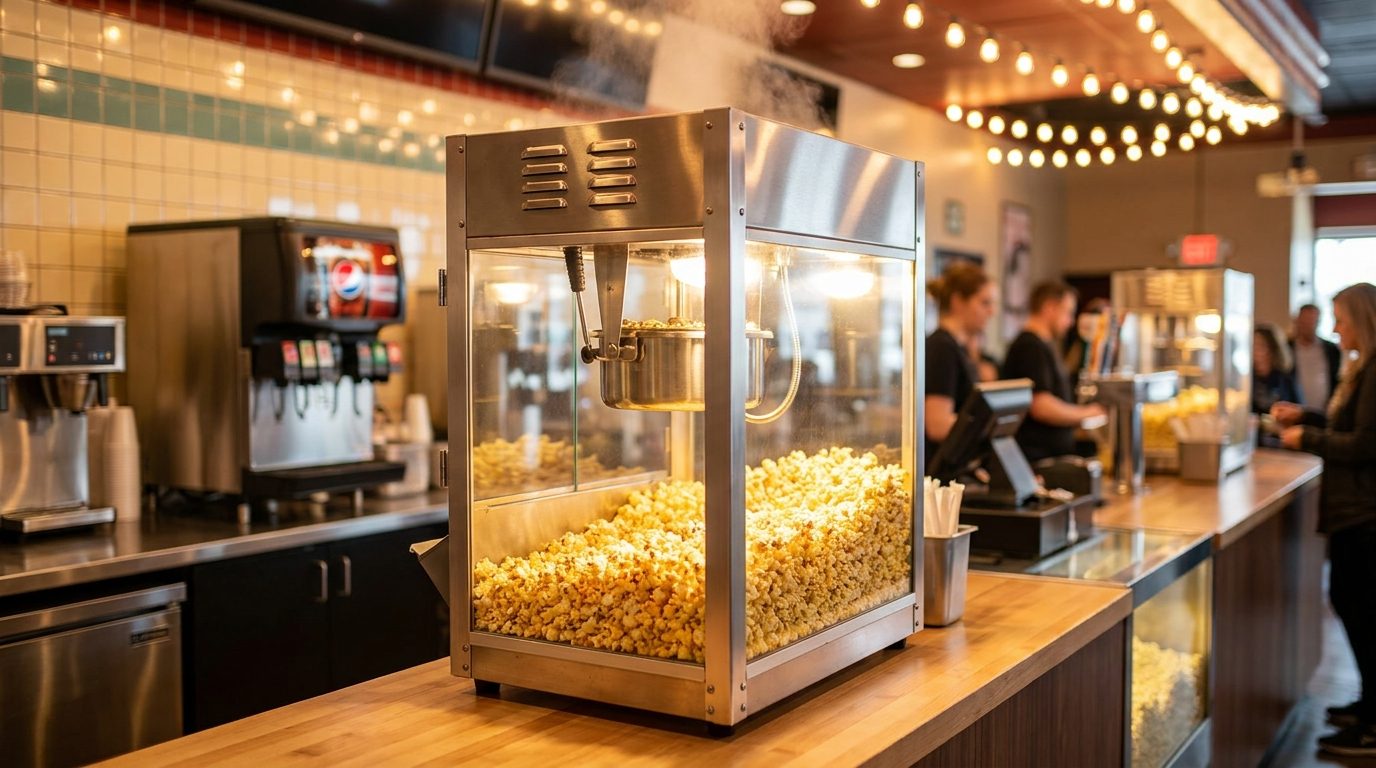
A commercial popcorn machine for business use is a heated kettle that pops corn in oil and drops it into a warmed holding cabinet, so product is both produced and displayed in one unit. The decisions that matter are the heat source (gas or electric), whether the machine includes a display showcase, and how many batches per hour you actually need at peak. Everything else - cart styling, lighting, wheels - follows those three.
Popcorn is one of the highest-margin items in food service because the raw ingredient is inexpensive, the shelf appeal is strong, and the smell sells the product without any promotion. The risk is buying a machine sized for the demand you imagine rather than the demand your site produces.
Where a popcorn machine earns its place
Cinemas are the obvious case, but they are not the only one. The machine works anywhere there is dwell time and impulse purchasing:
- Cinemas and entertainment venues - the core use, with demand concentrated in the minutes before each screening.
- Event and function catering - weddings, corporate events and school functions, where a popcorn station is a self-service feature rather than a service item.
- Retail and mall kiosks - continuous low-level production, with the display cabinet doing the selling.
- Hotels and banquet operations - kids' areas, poolside service, themed buffet stations, outdoor screenings.
- Amusement, sports and roadside trade - anywhere a cart can be positioned and moved.
In each case the machine is sold twice: once as production equipment, once as a visual merchandising unit. That dual role is why cabinet design matters commercially and not just cosmetically.
Gas or electric: the first real decision
Both heat a kettle that agitates and pops the corn; the difference is where the site lets you put the machine and what services it has.
| Consideration | Gas popcorn machine | Electric popcorn machine |
|---|---|---|
| Power requirement | LPG cylinder or line | Standard mains supply |
| Best position | Outdoor stalls, event grounds, semi-open areas | Indoor counters, lobbies, malls, cinemas |
| Mobility | Moves with the cylinder | Moves to any socket |
| Heat control | Burner adjustment, fast recovery | Thermostatic, steady and repeatable |
| Indoor suitability | Needs ventilation and gas handling | Straightforward indoors |
| Typical operator | Caterer, outdoor event trader | Fixed retail, cinema, hotel |
The Industrial Gas Pop Corn Machine and the Industrial Gas Pop Corn Machine LR suit event caterers and outdoor traders who move between sites and cannot depend on a socket. For an indoor counter that runs the same hours every day, an Industrial Electric Pop Corn Machine is simpler to site, quieter to operate and easier to hand to part-time staff, because the heat setting does not need judging.
With or without a showcase cabinet
A showcase model adds a glazed, illuminated holding cabinet under or around the kettle. It matters for three reasons.
First, display. Warm popcorn behind glass under a light is the advertisement; an open pan of popcorn on a counter is not. Second, holding quality - a warmed cabinet keeps the product crisp for a serving window rather than letting it soften in room air. Third, hygiene and control: enclosed product is protected from handling and airborne dust, which is essential in a mall or lobby position.
The Industrial Electric Pop Corn Machine With Showcase is the format to choose when the machine sits in front of customers all day and sells on sight. A machine without a showcase is the better buy when popcorn is produced in batches and bagged immediately - event catering, function service, or back-of-house production for a separate serving point. Both formats appear in the commercial popcorn machine range, and if the unit will anchor a wider impulse counter it is worth planning it alongside the other display equipment at the same time.
Understanding throughput
Popcorn production is cyclical. The kettle heats, oil and corn go in, the batch pops over a few minutes, the kettle is dumped, and the cycle restarts. Your hourly output is batch volume multiplied by cycles per hour, minus the time nobody is standing at the machine.
That has two consequences for buying. A cinema does not need continuous output; it needs enough product held warm in the cabinet before each screening, which means cabinet volume matters as much as kettle size. An event caterer serving a continuous queue needs cycle time and a second operator bagging, or the queue stalls at the kettle.
Rather than chasing a headline capacity figure, work backwards: how many servings must exist at the moment of peak demand, in what size bag or cup, and how long before that peak can you start popping without the product going soft. That calculation tells you whether you need a larger kettle, a bigger cabinet, or simply an earlier start.
Oil, corn and the operating routine
Commercial machines pop in oil rather than hot air, which is what produces the coating, gloss and flavour customers associate with cinema popcorn. Use a stable, high-smoke-point oil, keep the ratio of oil to corn consistent, and salt within the kettle or immediately on the dump tray so it adheres while the product is hot and slightly oily.
Two habits protect the equipment and the product. Clean the kettle daily, because carbonised oil residue transfers bitterness into every subsequent batch and eventually affects heating. And do not overfill: an overloaded kettle pops unevenly, leaves unpopped kernels, and forces the operator to hold product too long.
Caramel, cheese and flavoured production is a different workflow. Coated popcorn is usually finished outside the kettle in a mixing pan or drum to avoid burning sugar onto the kettle surface, so plan bench space for it if flavoured lines are part of the plan.
Siting and utilities
Popcorn machines are compact but demanding about position. Give the unit clearance at the front for serving and at the back for the kettle to be lifted and dumped. Keep it away from air conditioning outflow, which softens the product. If the machine sits in a public area, plan a bagging and cash position beside it so the operator does not have to leave the machine.
Gas units need cylinder space, secure hose routing and airflow. Electric units need a dedicated socket on a circuit that is not shared with other heating appliances. Both need a nearby cleaning point - the kettle has to be wiped every day, and grease around a popcorn machine spreads faster than most operators expect.
How to choose: decision checklist
- Define the site. Indoor and permanent points to electric; outdoor and mobile points to gas.
- Decide whether the machine is also your shop window. If customers see it, buy a showcase model.
- Work out peak servings, not daily servings, and confirm the cabinet can hold that quantity warm.
- Check the serving format. Cups, bags or boxes change how much holding volume you need and how fast one operator can serve.
- Confirm your services. Socket capacity and position for electric; cylinder space and ventilation for gas.
- Plan the flavour range. Salted only can run from the kettle; caramel or cheese needs a separate finishing station.
- Budget the daily clean into your labour plan - kettle, glass and tray, every day.
- Look at the wider display area. Popcorn usually sits alongside other impulse items, and the food warmers and displays range covers the neighbouring counter equipment.
Frequently asked questions
Is a popcorn machine a good business investment?
The economics are favourable because the raw ingredient cost per serving is low and the product sells on smell and sight. The limiting factors are footfall and peak-hour output, not margin. Sites with dwell time - cinemas, events, malls, hotels - convert far better than sites people walk straight past.
Should I buy a gas or electric popcorn machine?
Choose electric for fixed indoor positions where you have a reliable socket and need consistent, repeatable operation from any staff member. Choose gas if you trade outdoors, move between event sites, or cannot rely on power at the location. Gas needs cylinder handling and ventilation planning.
Do I need a machine with a display cabinet?
If customers see the machine, yes - the illuminated cabinet holds product warm and does the selling. If you pop in batches and bag immediately for service elsewhere, a machine without a showcase is simpler and takes less counter space.
How much popcorn can one machine produce?
Output is batch size times cycles per hour, so it depends on the model and the operator's routine. The practical planning method is to count the servings you must have ready at your peak moment and start production early enough to fill the cabinet, rather than relying on continuous popping during the rush.
What maintenance does a commercial popcorn machine need?
Daily kettle cleaning to remove carbonised oil, daily glass and tray cleaning, and regular checks of the agitator and heating element or burner. Neglected kettles produce bitter batches and uneven popping, which shows up in product quality long before the machine fails.
Where to start
Decide the position and the peak first, then choose the heat source and whether the machine needs a showcase. The popcorn machine range covers gas, electric and showcase formats. If the machine is part of a wider concession, event or lobby build, the hotel equipment guide and the commercial kitchen equipment range cover the supporting stations around it.
Share:
Waffle Business Guide: Bubble, Belgian, Cone and Stick Machines
Chocolate Melting Machine Guide: Tempering, Capacity and Workflow