Blog Articles

Panini Press vs Griddle Plate: Choosing the Right Cooking Surface
Panini Press vs Griddle Plate: Choosing the Right Cooking Surface

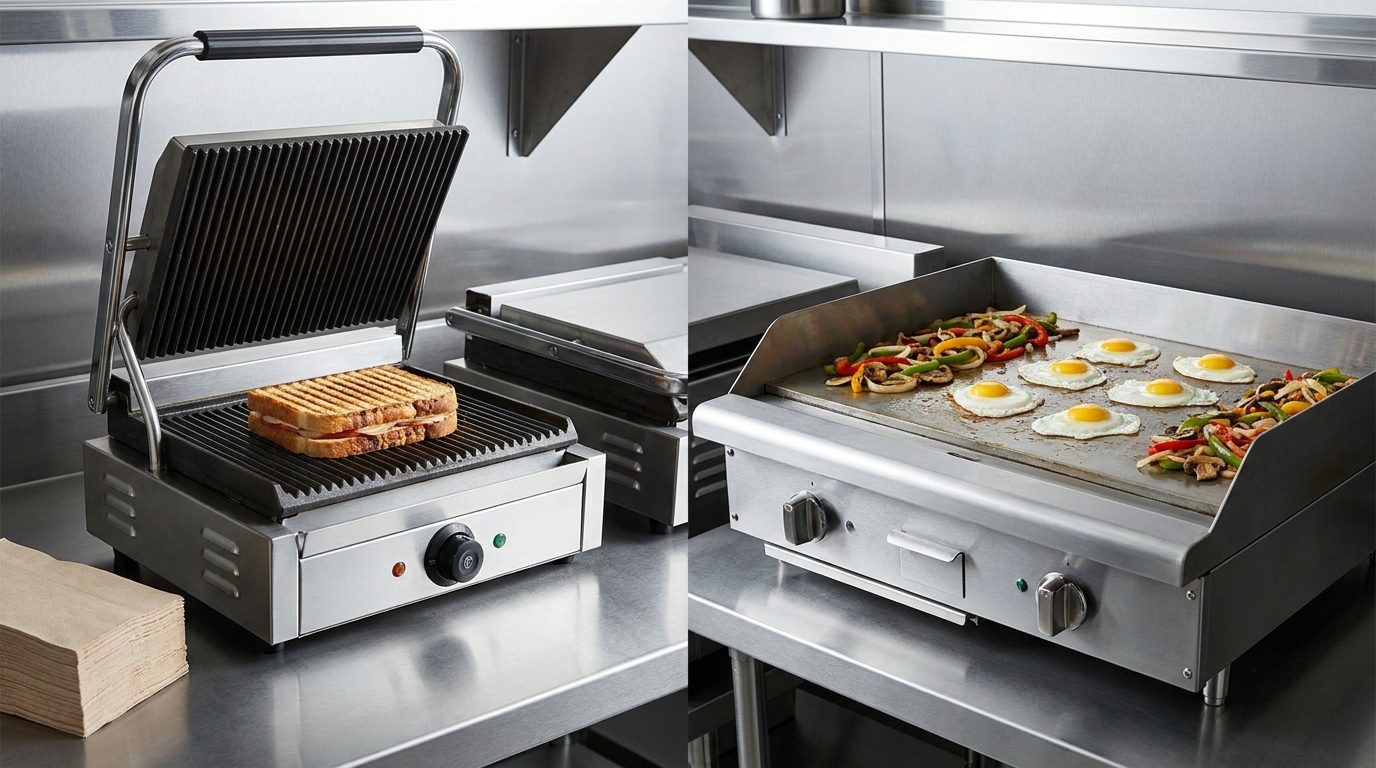
A panini press cooks from both sides at once between two hinged plates, so a filled sandwich heats through and marks in one closed cycle without being turned. A griddle plate is a single open heated surface you cook on from above, which lets you hold many items at different stages at the same time. If your menu is built on pressed sandwiches and wraps, you want a press; if it is built on eggs, burgers, kottu, onions, bacon and anything that needs turning or holding, you want

Read moreabout Panini Press vs Griddle Plate: Choosing the Right Cooking Surface

What is a salamander grill, and what is it used for?
What is a salamander grill, and what is it used for?

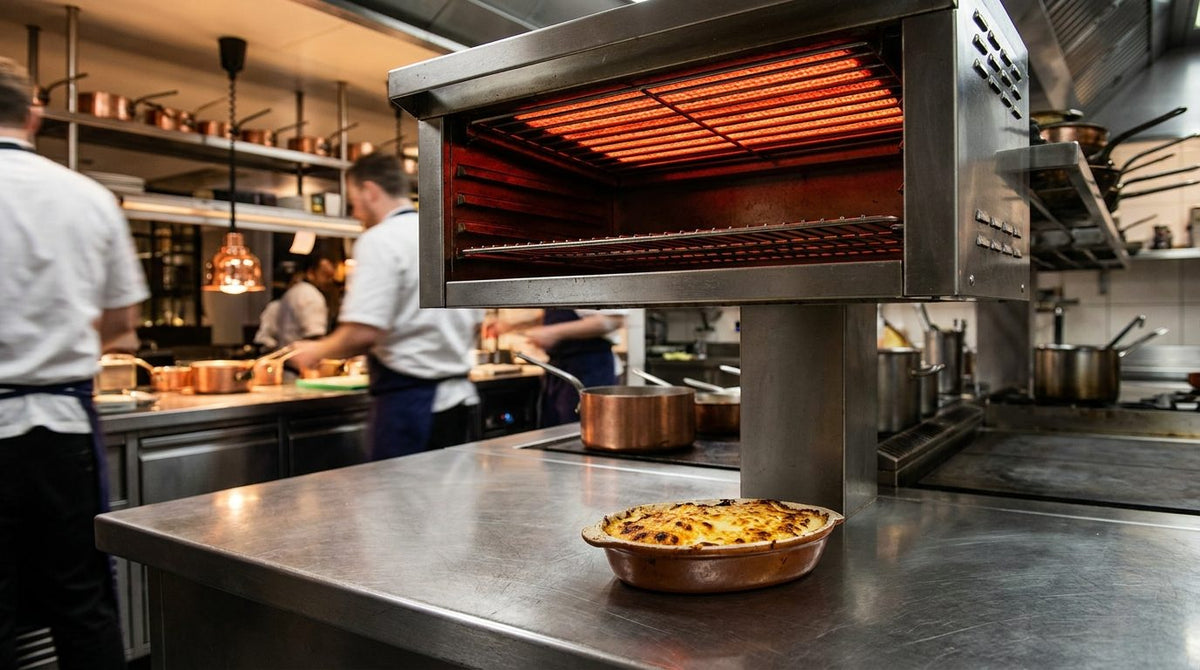
A salamander grill is a commercial overhead grill: the heat source sits above the food, radiating downwards onto a shelf or tray. It is used for finishing rather than cooking through β€” melting and browning cheese, glazing and gratinating, colouring the top of a dish, toasting bread at volume, and holding plated food briefly before it leaves the pass. Because the heat comes from above and reaches working temperature quickly, a salamander does in thirty seconds what an oven wou

Read moreabout What is a salamander grill, and what is it used for?

Choosing a milkshake machine for a shop or cafΓ©

Choosing a milkshake machine for a shop or cafΓ©

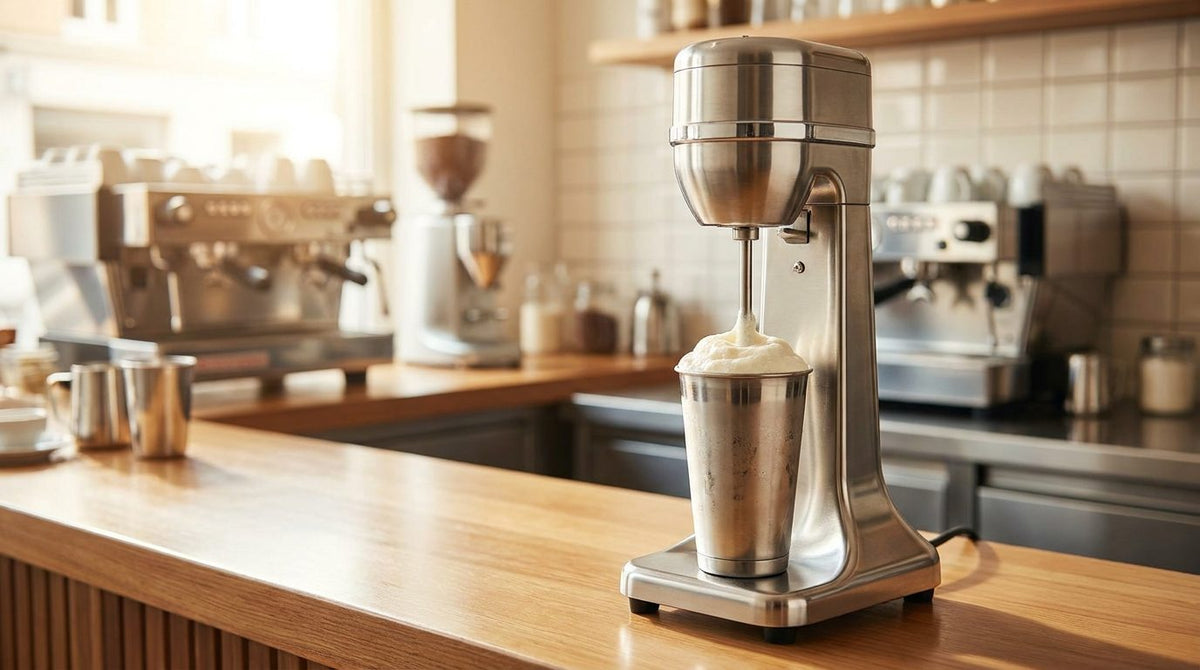
A milkshake machine for a shop is a spindle mixer: a fixed motor with a slim agitator that spins inside a stainless cup, aerating ice cream and milk into a smooth shake without shredding it the way a blender blade does. The choice comes down to three questions β€” how many shakes you sell in your busiest hour, whether your shakes are ice-cream-based or milk-and-syrup-based, and how many flavours you need running at the same time.

Read moreabout Choosing a milkshake machine for a shop or cafΓ©

Types of juicers explained: centrifugal, masticating and commercial extractors
Types of juicers explained: centrifugal, masticating and commercial extractors

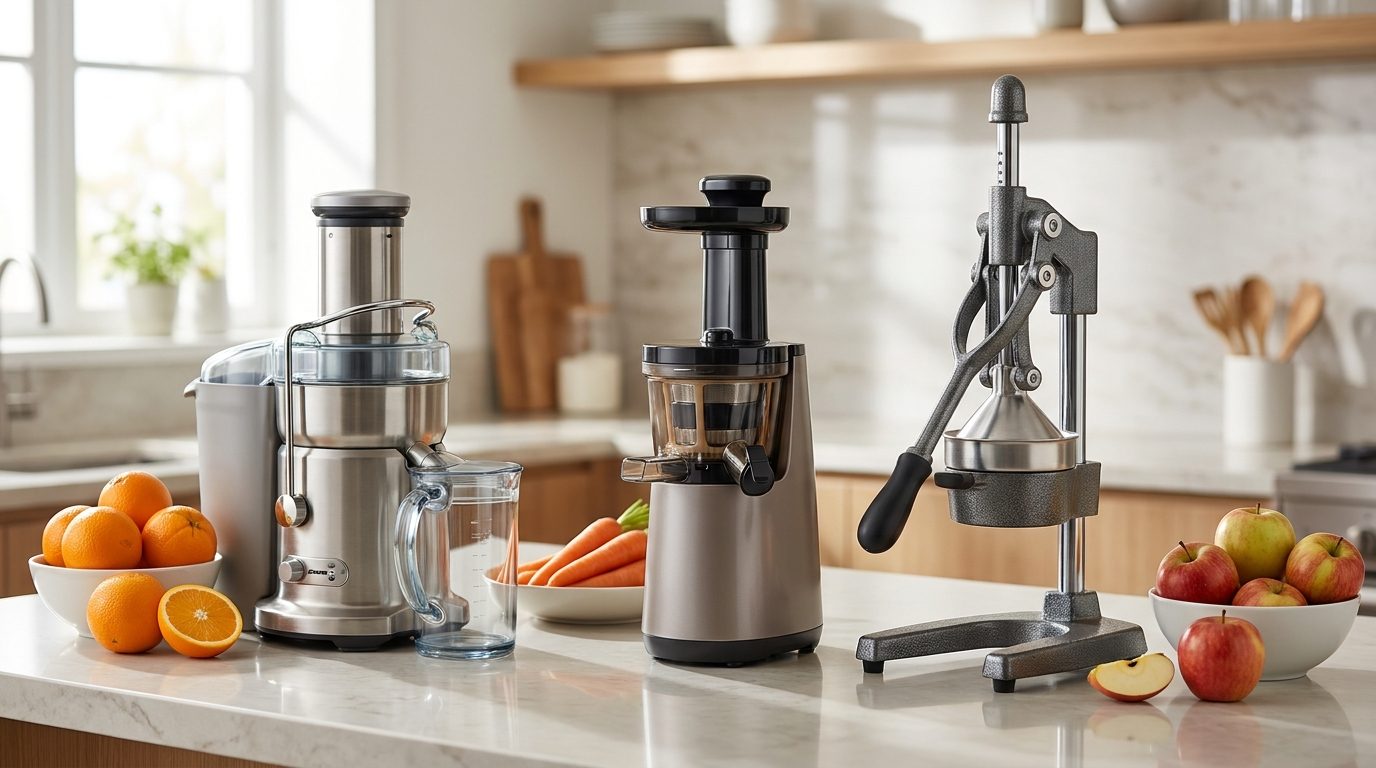
There are four juicer families worth knowing: centrifugal juicers, which shred fruit against a spinning screen and spin the juice out; masticating or slow juicers, which crush and press produce with an auger; citrus presses, which are built only for halved citrus; and commercial extractors, which are heavy-duty machines designed for continuous feeding through a service. The right one depends far more on what you juice and how long the machine runs than on any headline power f

Read moreabout Types of juicers explained: centrifugal, masticating and commercial extractors

Water boiler capacity for a restaurant: how to size it properly
Water boiler capacity for a restaurant: how to size it properly

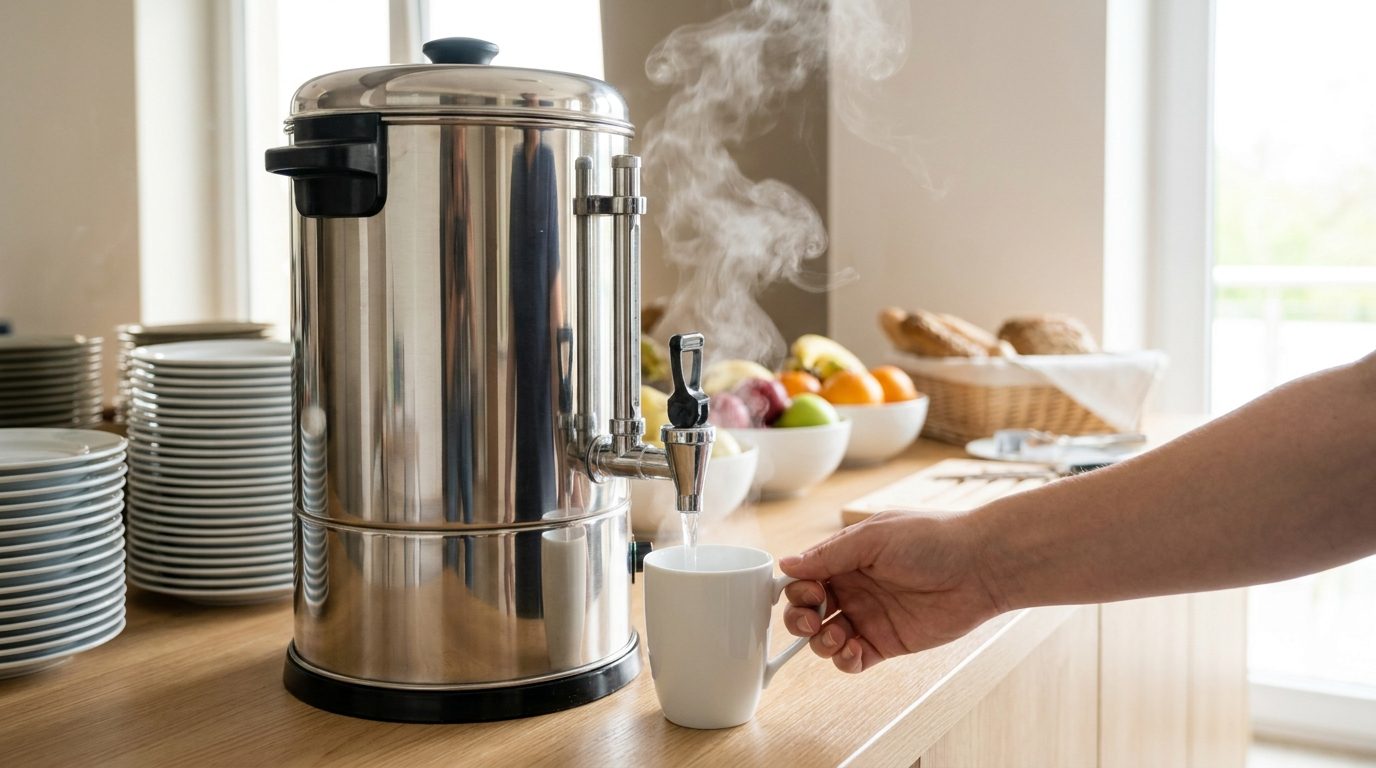
Size a commercial water boiler on peak-hour cups, not on daily volume. Count the hot drinks you serve in your busiest hour, allow roughly five to six cups per litre, and choose a tank that holds most of that hour's demand so the unit is topping up rather than starting from cold. A boiler that is one size too small does not just run out β€” it spends the whole service reheating, and the queue waits on the element rather than on your staff.

Read moreabout Water boiler capacity for a restaurant: how to size it properly

How to choose a juice dispenser for events and catering
How to choose a juice dispenser for events and catering

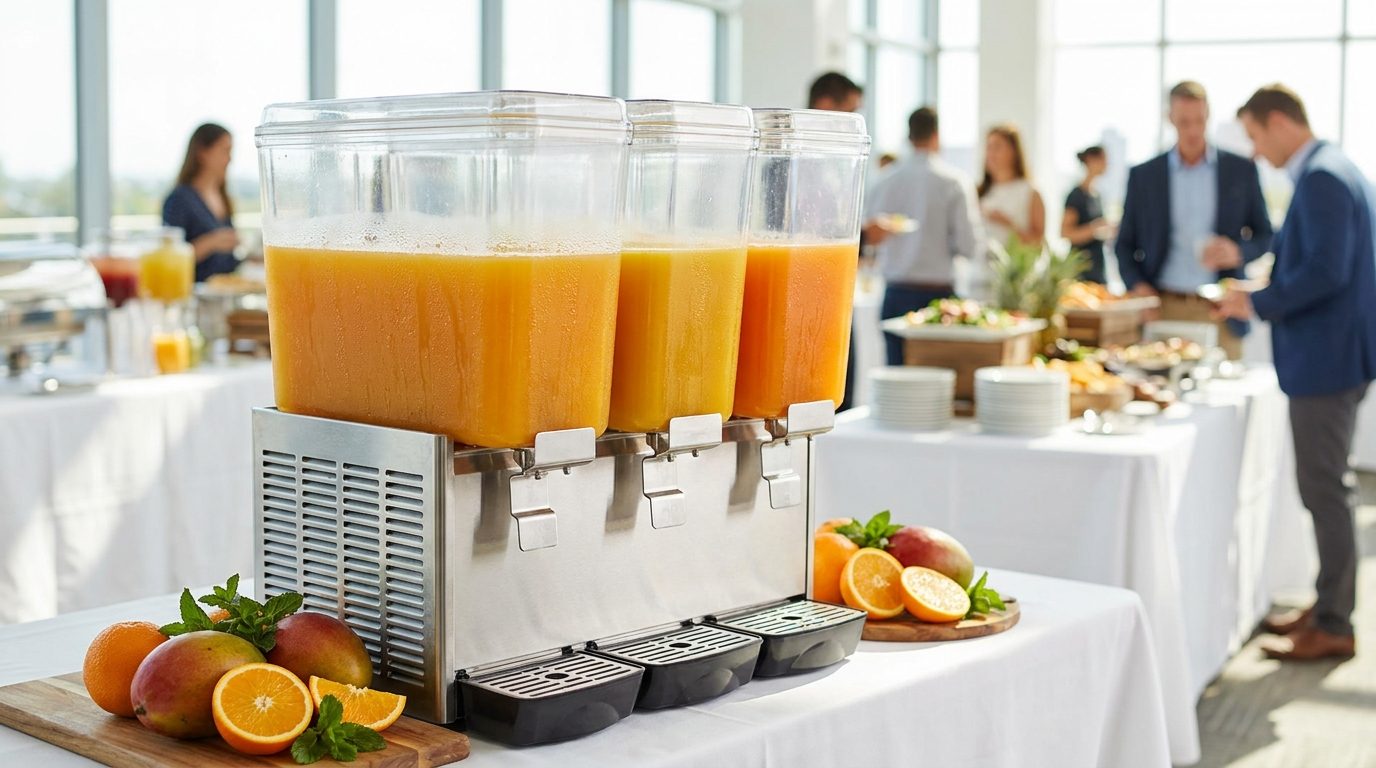
For events, choose a juice dispenser by three things: how many guests you have to serve in the busiest thirty minutes, how many drink varieties you want visible at once, and whether the venue gives you a power point at the drinks station. A multi-tank unit lets one server pour without touching a jug, keeps varieties separated, and shows guests what is on offer β€” which is why tank dispensers replaced jug service at almost every buffet line.

Read moreabout How to choose a juice dispenser for events and catering

Room service trolley types for hotels, and how to choose between them
Room service trolley types for hotels, and how to choose between them

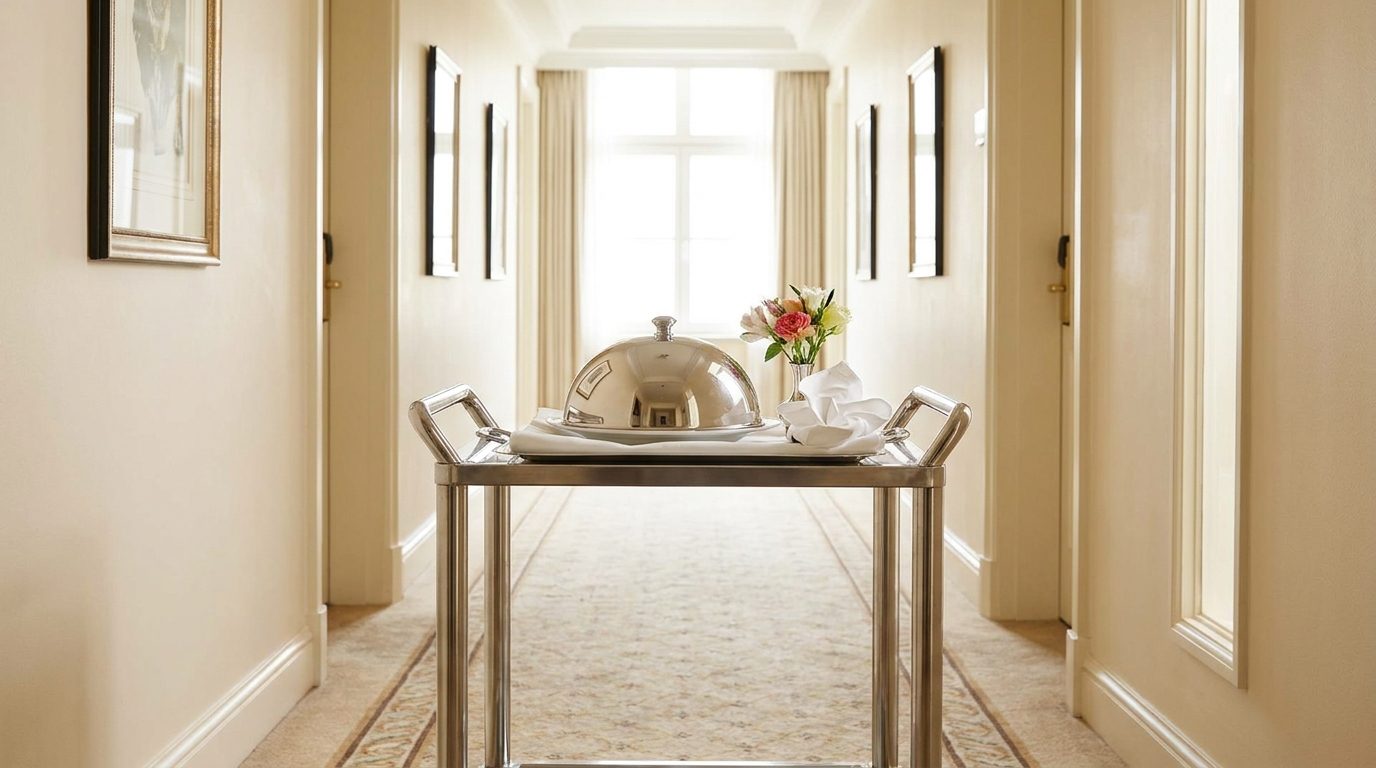
Hotels use four broad trolley types, and they are not interchangeable: open-shelf serving trolleys for room service and guest-facing delivery, GN rack trolleys for moving Gastronorm pans between kitchen and buffet, tray rack trolleys for bakery and production, and clearing trolleys for the return run to the wash-up. The right choice is decided by what sits on the shelves, how far the route is, and what the floor is made of. Get the trolley wrong and you either double the numb

Read moreabout Room service trolley types for hotels, and how to choose between them

Banquet hall equipment list: planning by service style, not by guest count
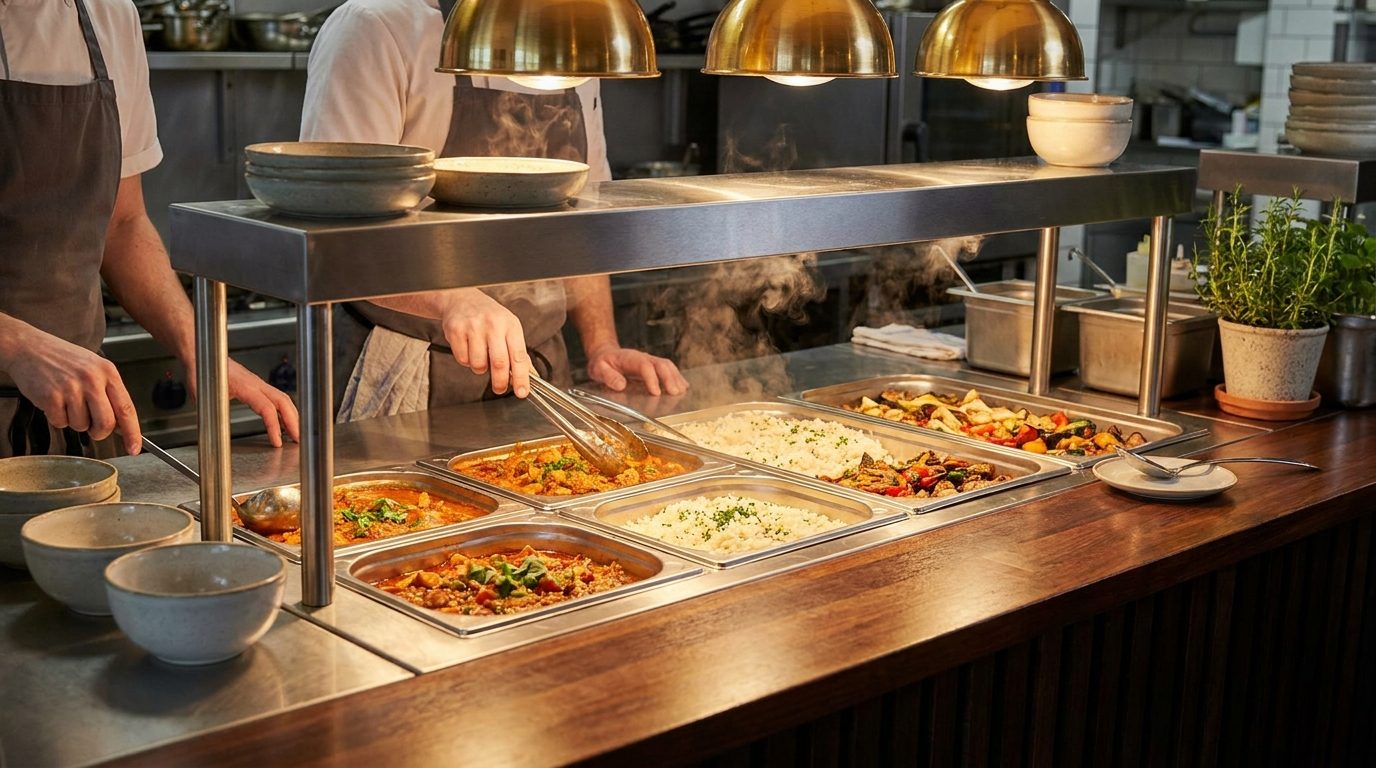
Banquet hall equipment list: planning by service style, not by guest count

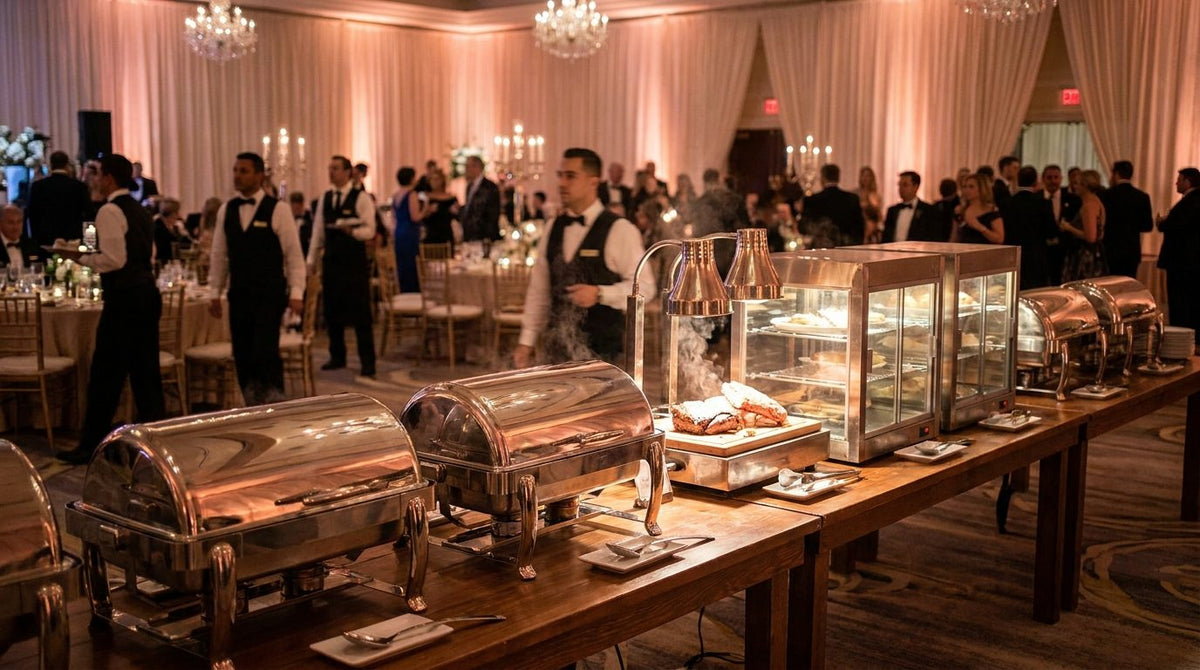
A banquet hall equipment list starts with one decision: how the food reaches the guest. Plated service, buffet service, live stations and cocktail service each need a different set of equipment, and guest count only tells you how many of each. A 300-cover plated dinner and a 300-cover buffet share almost nothing except the trolleys. This guide works through the equipment zone by zone, so you can build a list against the service style you actually sell.

Read moreabout Banquet hall equipment list: planning by service style, not by guest count

Bain marie vs food warmer: what the difference actually means for your food

Bain marie vs food warmer: what the difference actually means for your food

A bain marie holds food using wet heat β€” pans sit in or above a heated water bath, so the food is warmed indirectly in a humid environment. A dry food warmer holds food using direct radiant or convected heat with no water. That single difference decides everything else: wet heat protects moisture and is forgiving over long holding windows, dry heat preserves crispness but dries anything saucy. Choosing between them is really a question of what you are holding and for how long

Read moreabout Bain marie vs food warmer: what the difference actually means for your food