

Blog Articles

The best coffee machine for an office depends on headcount and who cleans it
The best coffee machine for an office depends on headcount and who cleans it

For most offices the choice is between a capsule machine and a bean-to-cup machine. Capsule suits teams up to roughly a dozen regular drinkers, where nobody wants a cleaning duty and consistency matters more than bean choice. Bean-to-cup suits larger offices with steady all-day demand and one person willing to own the daily rinse. Beyond about fifty regular drinkers, a canister or commercial machine usually makes more sense than either.

Read moreabout The best coffee machine for an office depends on headcount and who cleans it

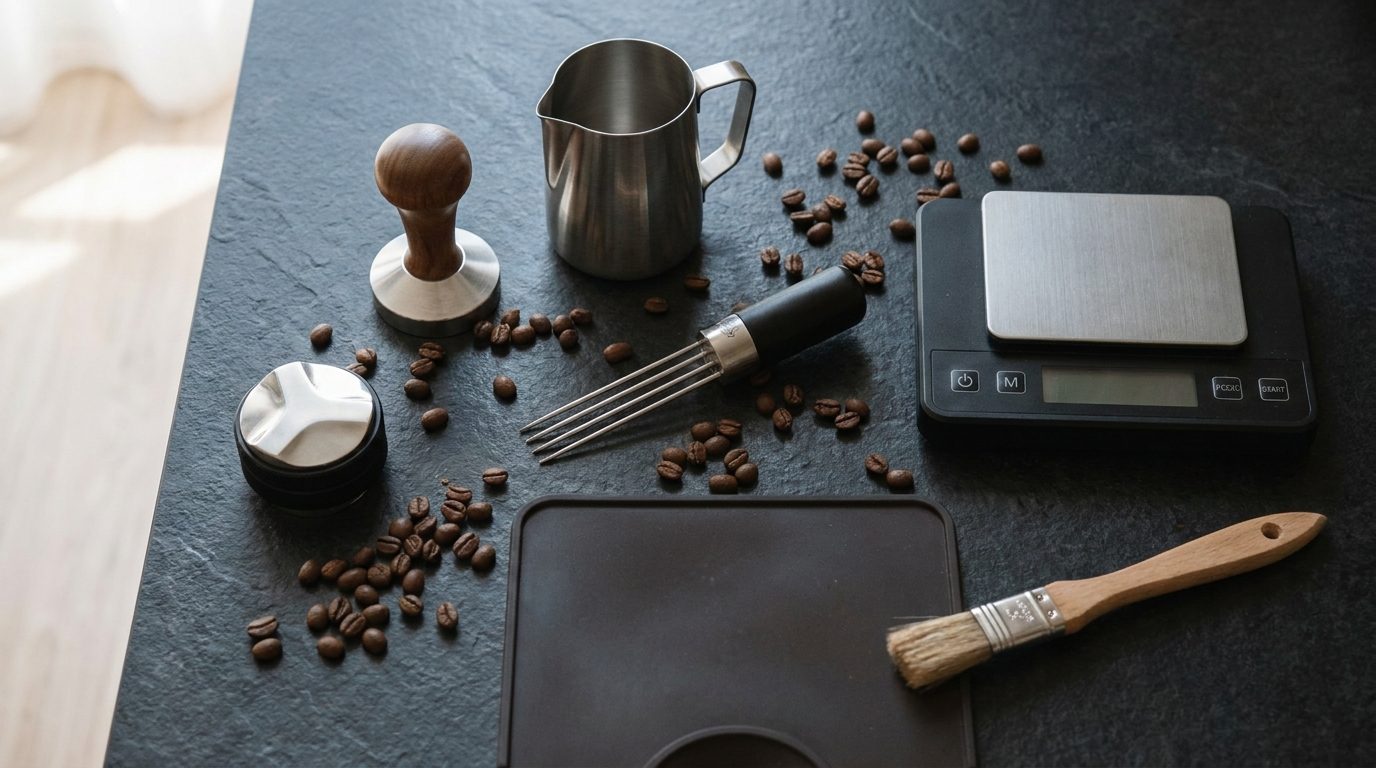
Barista tools list for beginners: what a new cafΓ© bar actually needs

Barista tools list for beginners: what a new cafΓ© bar actually needs

A beginner's barista kit comes down to eight items: a tamper, a distributor or levelling tool, a WDT needle tool, a scale with a timer, a knock box, a milk jug, a cleaning brush with detergent, and cloths dedicated to specific jobs. Everything else on the market is refinement. Buy the eight, learn them properly, and add later.

Read moreabout Barista tools list for beginners: what a new cafΓ© bar actually needs

Flat burr vs conical burr grinder: what actually changes in the cup
Flat burr vs conical burr grinder: what actually changes in the cup

Flat burrs sit as two parallel rings and push coffee outward through a uniform gap; conical burrs sit as a cone inside a ring and let gravity pull coffee down through a narrowing gap. In practice, flat burrs are associated with a tighter particle spread and a clearer, more separated cup, while conical burrs are associated with a slightly wider spread, more body, and lower motor and heat demands. Both make excellent espresso. Burr size, alignment and adjustment quality matter

Read moreabout Flat burr vs conical burr grinder: what actually changes in the cup

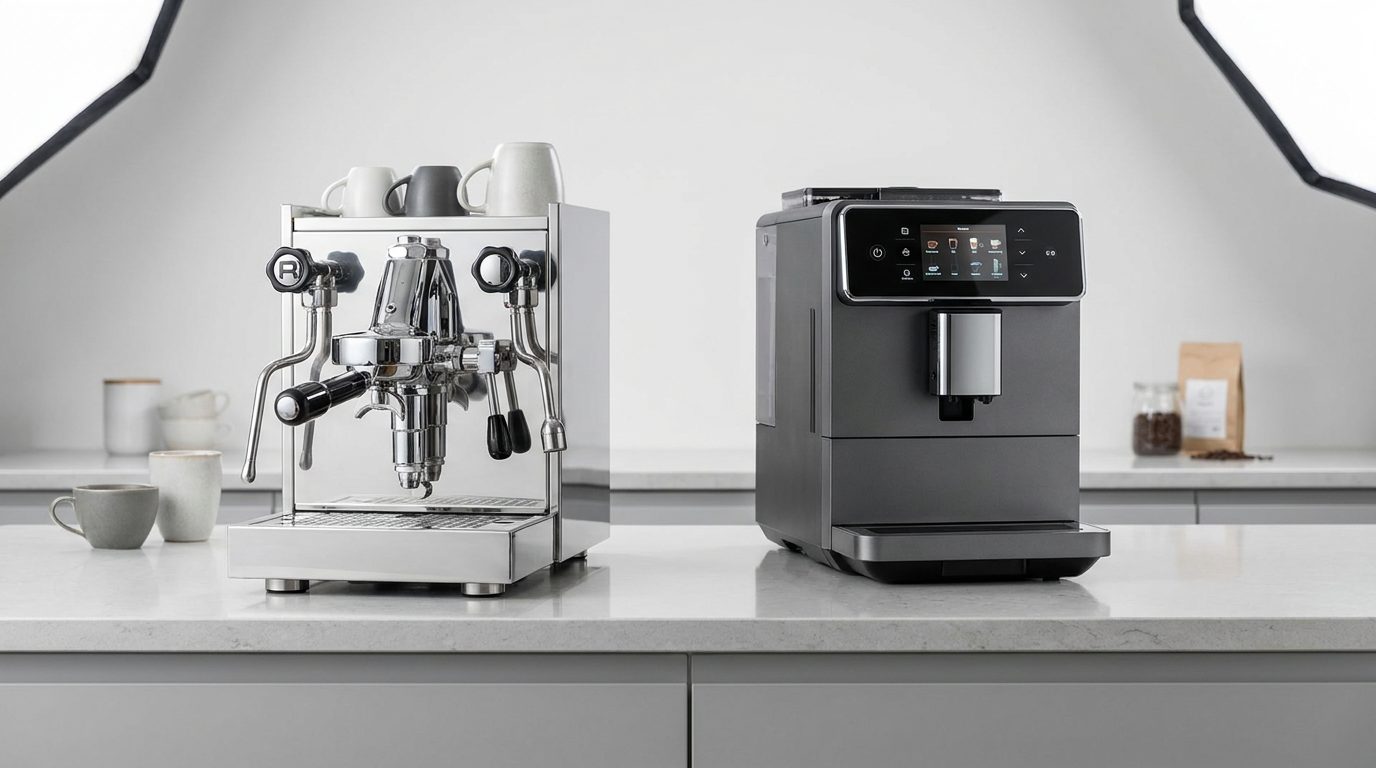
Semi-automatic vs fully automatic coffee machine: which one fits your service?

Semi-automatic vs fully automatic coffee machine: which one fits your service?

A semi-automatic machine leaves dose, tamp and shot timing in the barista's hands; a fully automatic (bean-to-cup) machine grinds, doses, tamps, brews and usually froths at one button press. Choose semi-automatic when espresso craft is part of what you sell and you have trained staff. Choose fully automatic when repeatable output without a barista matters more β€” offices, hotel breakfast lines, staff pantries and self-service counters.

Read moreabout Semi-automatic vs fully automatic coffee machine: which one fits your service?

1 Group vs 2 Group Espresso Machine: Group Heads Explained
1 Group vs 2 Group Espresso Machine: Group Heads Explained

A group head is the assembly the portafilter locks into β€” the point where pressurised hot water meets the coffee bed. The number of groups on a machine tells you how many espressos can be extracted at the same time, and therefore how many drinks one or two baristas can build in parallel. A one-group machine suits a low-volume counter, an office or a kiosk. A two-group machine is the working standard for a cafΓ© with a queue, because it lets a barista extract one drink while st

Read moreabout 1 Group vs 2 Group Espresso Machine: Group Heads Explained

How to Start a Cafe in Sri Lanka: The Equipment Checklist
How to Start a Cafe in Sri Lanka: The Equipment Checklist

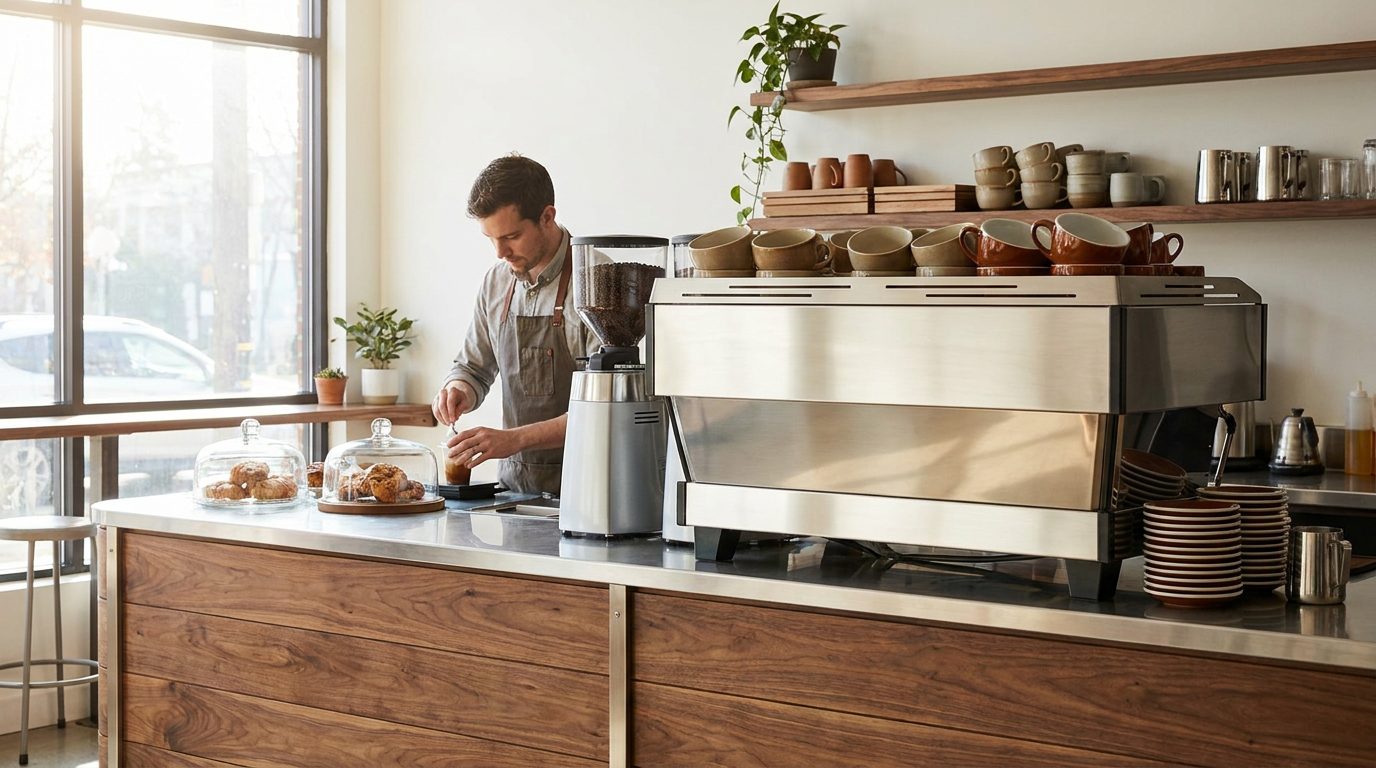
Every cafΓ© equipment list comes down to five zones: the coffee bar, the cold chain, the food line, front-of-house service, and back-of-house washing and storage. The coffee bar decides your product quality and your queue speed, so it takes the largest share of attention and investment; the other four decide whether you can serve food profitably and keep the health and hygiene side of the operation defensible.

Read moreabout How to Start a Cafe in Sri Lanka: The Equipment Checklist

Bakery Proofing and Cooling Equipment: Building a Workflow That Keeps Up
Bakery Proofing and Cooling Equipment: Building a Workflow That Keeps Up

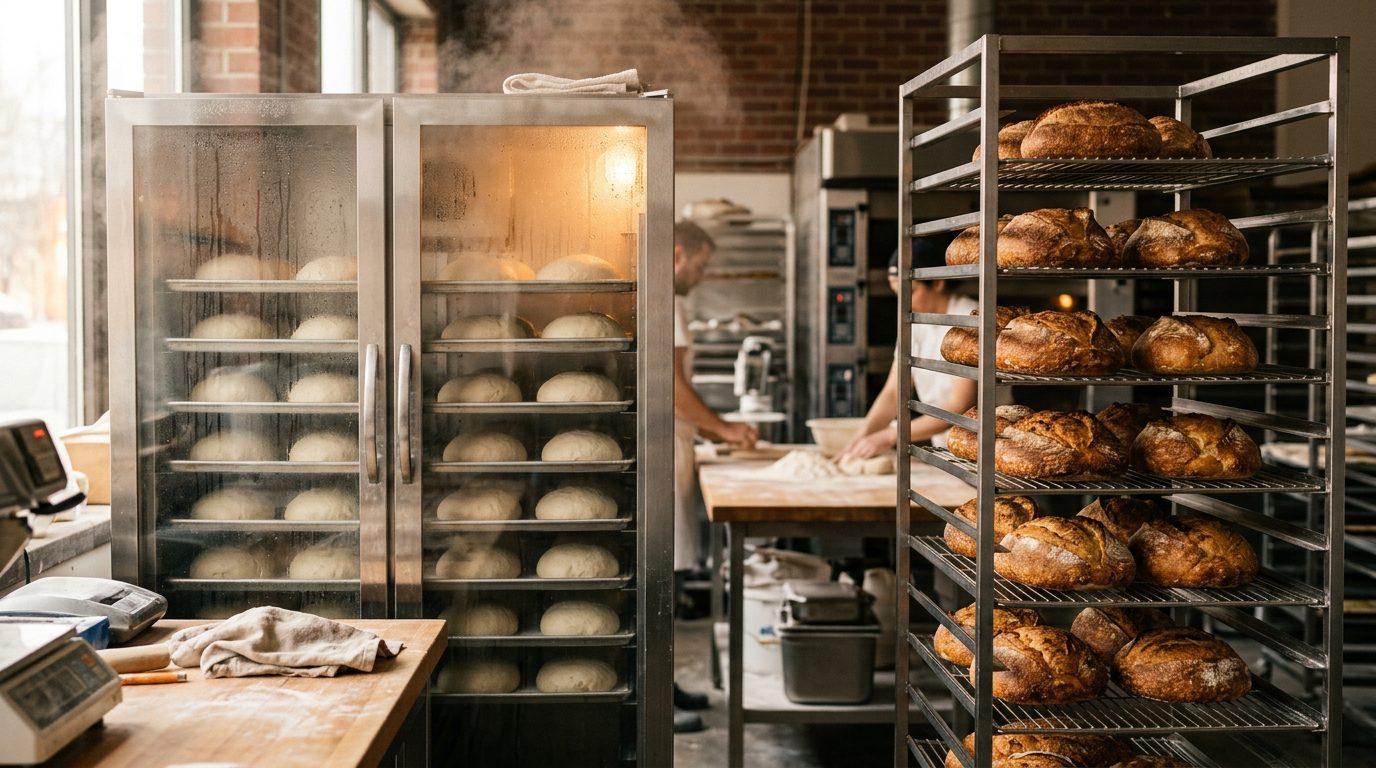
Most bakery bottlenecks are not in the mixer or the oven. They sit in the two stages either side of the bake: proofing, where dough needs controlled warmth and humidity for a fixed period you cannot rush, and cooling, where finished product needs airflow and time before it can be sliced or packed. Get proofing and cooling equipment sized correctly and the oven runs continuously; get it wrong and you are either waiting for dough or stacking hot bread on a bench.

Read moreabout Bakery Proofing and Cooling Equipment: Building a Workflow That Keeps Up

Deck Oven vs Convection Oven vs Rotary Oven: Choosing a Bakery Oven
Deck Oven vs Convection Oven vs Rotary Oven: Choosing a Bakery Oven

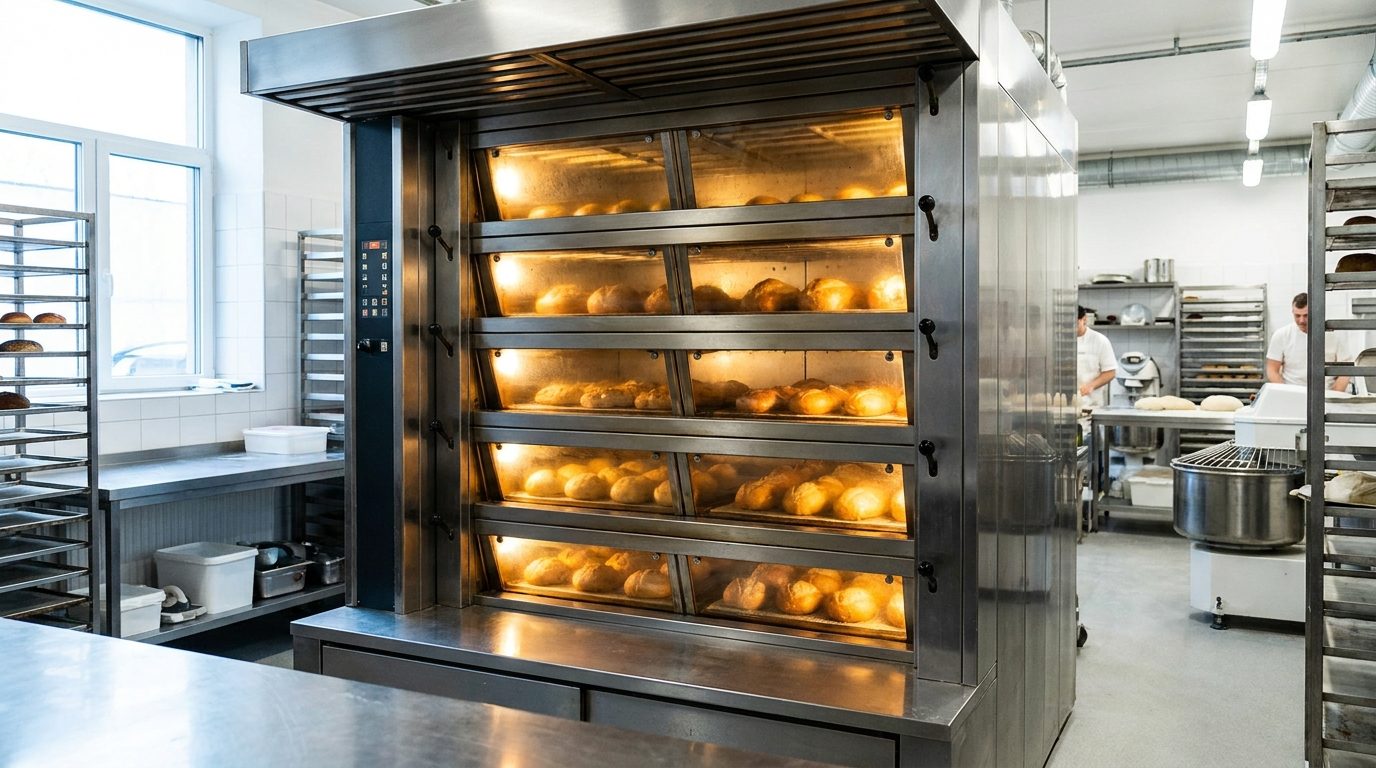
The difference between the three main bakery oven types is how heat reaches the product. A deck oven bakes mainly by conduction from a hot hearth plus radiant heat from the chamber, which is why it produces the bottom crust and oven spring that bread and pizza need. A convection oven bakes by moving hot air with a fan, which gives fast, even colour across many trays β€” ideal for pastry, biscuits and buns. A rotary rack oven is a convection oven with a rotating trolley inside,

Read moreabout Deck Oven vs Convection Oven vs Rotary Oven: Choosing a Bakery Oven

Spiral Mixer vs Planetary Mixer: Which Belongs in Your Bakery

Spiral Mixer vs Planetary Mixer: Which Belongs in Your Bakery

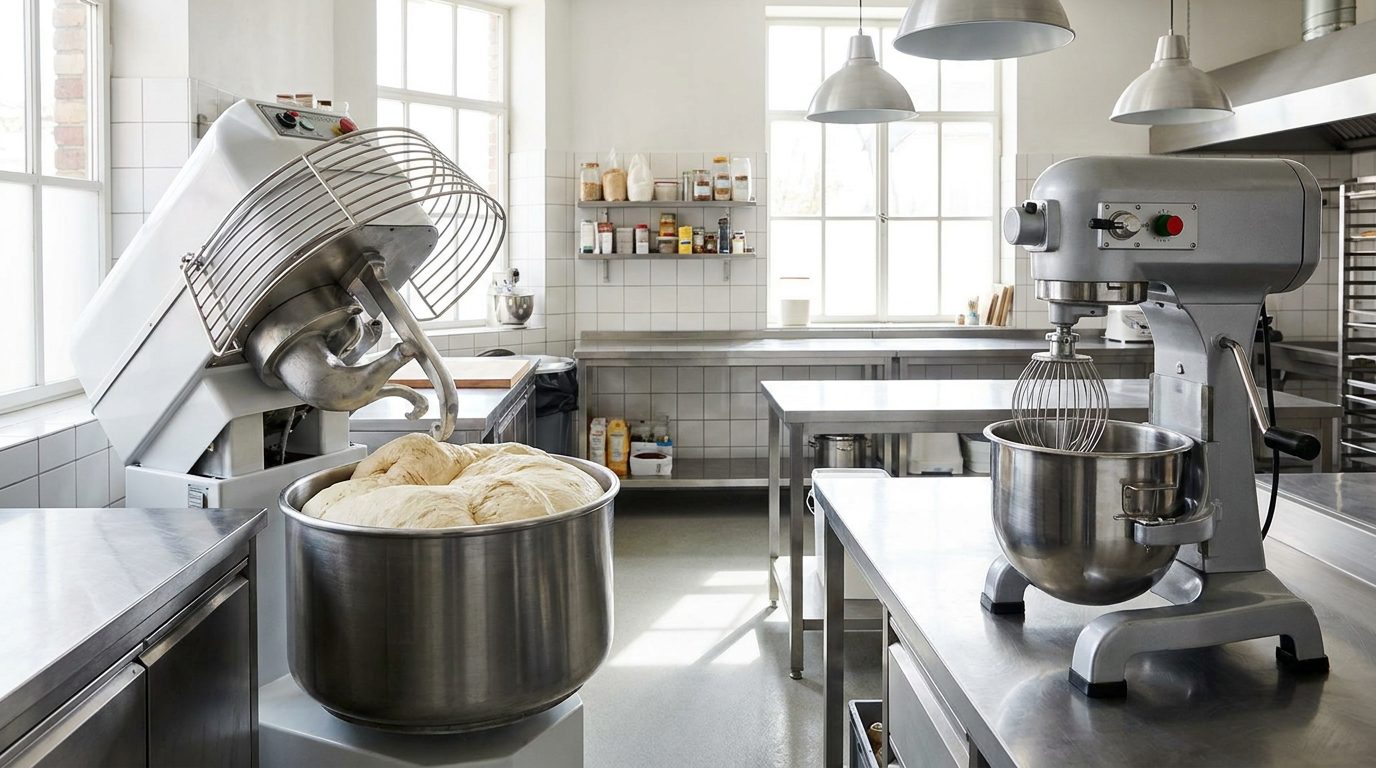
A spiral mixer is built for one job β€” developing bread dough β€” and it does that job with less friction heat and less strain on the machine than any planetary of equivalent size. A planetary mixer is a general-purpose machine: change the tool and it whips cream, creams butter and sugar, mixes cake batter, and handles light dough. Most working bakeries in Sri Lanka eventually own both, because they are not competing designs; they solve different halves of the production day.

Read moreabout Spiral Mixer vs Planetary Mixer: Which Belongs in Your Bakery